Industrial IoT (IIoT) is transforming industries like manufacturing, agriculture, oil & gas, and energy.
These devices operate in extreme environments, high temperatures, humidity, vibration, dust, and chemical exposure.
In such conditions, the selection of PCB material becomes a critical factor that directly impacts device reliability, performance, and lifespan.
Choosing the wrong material can lead to overheating, signal failure, corrosion, and ultimately, system breakdown.
That’s why understanding the right materials for industrial IoT PCB manufacturing is essential for engineers and product developers.
In this blog post, let’s dig deeper to create highly performing IoT devices for the industrial market.
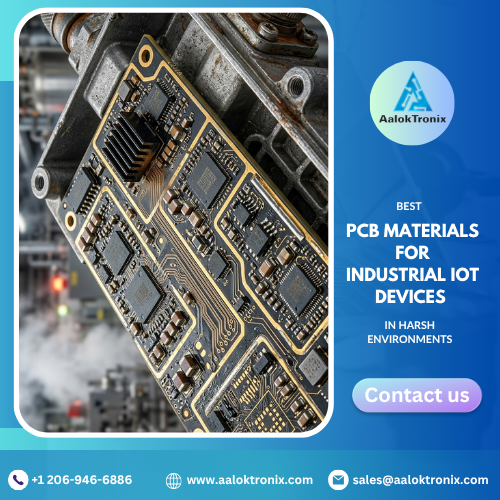
What Makes Industrial IoT PCB Design Different?
Unlike consumer electronics, industrial IoT devices must withstand:
- Extreme temperature fluctuations
- High humidity and moisture exposure
- Mechanical stress and vibration
- Dust, chemicals, and corrosive environments
These conditions demand not just strong design, but also the right PCB materials and manufacturing processes.
Reliable PCB assembly for IoT devices plays a key role in ensuring these materials perform effectively in real-world conditions.
Why PCB Material Selection Is Critical for Harsh Environments
The base material of a PCB determines:
- Thermal resistance
- Electrical performance
- Mechanical strength
- Moisture absorption
- Longevity under stress
Poor material selection can lead to:
- Delamination
- Cracking under vibration
- Signal instability
- Reduced device lifespan
This is why proper material selection combined with design optimisation is essential, especially when following design for manufacturability (DFM) principles.
Best PCB Materials for Industrial IoT Applications
1. FR4 (High-Tg Variant)
FR4 is widely used, but for industrial IoT, high glass transition temperature (Tg) FR4 is preferred.
Best For:
- Moderate industrial environments
- Cost-sensitive applications
Advantages:
- Affordable
- Good mechanical strength
- Improved heat resistance (with high-Tg variants)
Limitations:
- Not ideal for extreme heat or high-frequency applications
2. Polyimide PCBs
Polyimide is one of the most reliable materials for harsh environments.
Best For:
- Aerospace and defense IoT
- Oil & gas monitoring systems
- High-temperature applications
Advantages:
- Excellent thermal stability
- High flexibility
- Strong chemical resistance
Polyimide works well in designs where PCB thermal management techniques are critical.
3. Rogers (High-Frequency Materials)
Rogers materials are ideal for IoT devices that rely heavily on RF communication.
Best For:
- Wireless IoT devices
- Industrial communication systems
Advantages:
- Low signal loss
- Stable dielectric properties
- High-frequency performance
These materials are especially important when designing PCBs for connectivity and signal integrity.
4. Metal Core PCBs (MCPCB)
Metal core PCBs use aluminium or copper bases to improve heat dissipation.
Best For:
- Power electronics
- LED systems
- High-current industrial devices
Advantages:
- Excellent heat dissipation
- Increased durability
- Improved reliability
These are often paired with PCB heat dissipation strategies.
5. Ceramic PCBs
Ceramic materials provide extreme durability and thermal performance.
Best For:
- High-reliability industrial systems
- Harsh chemical environments
- High-power applications
Advantages:
- Superior thermal conductivity
- High mechanical strength
- Resistance to corrosion
How to Choose the Right PCB Material for Industrial IoT
Selecting the right material depends on several factors:
- Operating Temperature
High-temperature environments require materials like polyimide or ceramic.
- Environmental Exposure
Moisture, dust, and chemicals demand protective materials and coatings.
- Electrical Requirements
High-frequency applications need materials like Rogers.
- Cost vs Performance
Balancing performance with cost is essential—especially for large-scale deployment.
Understanding PCB manufacturing cost factors helps make better decisions.
Additional Manufacturing Considerations for Industrial IoT
Material selection alone isn’t enough. You must also consider:
Conformal Coating
Protects PCBs from moisture, dust, and chemicals.
Reinforced Soldering
Improves resistance to vibration and mechanical stress.
Advanced Inspection
Ensures reliability through PCB inspection technologies.
Compliance Requirements
Industrial IoT devices often require certifications such as IPC standards and RoHS compliance.
Common Mistakes in Material Selection
Avoid these common errors:
- Choosing FR4 for extreme environments
- Ignoring thermal expansion mismatch
- Overlooking moisture absorption
- Selecting materials without considering RF performance
Many of these issues stem from early design decisions and can be avoided by following PCB layout optimization techniques.
Why Material Choice Impacts Long-Term IoT Performance
Industrial IoT devices are expected to operate for years without failure.
The right PCB material ensures:
- Stable performance under stress
- Reduced maintenance costs
- Improved device lifespan
- Consistent connectivity
This is why experienced manufacturers emphasise both material selection and high-quality PCB assembly for IoT devices.
Final Thoughts
Industrial IoT environments demand more than standard PCB design. Choosing the right materials, combined with proper layout, testing, and manufacturing, ensures your device performs reliably even in the toughest conditions.
From high-temperature resistance to signal stability and durability, every material decision impacts the success of your product.
At Aaloktronix, we specialise in reliable PCB assembly for IoT devices, helping businesses across the United States build durable, high-performance industrial IoT solutions.
Working on an industrial IoT project?
Connect with Aaloktronix to ensure your PCB materials and assembly processes are optimised for real-world performance.