Introduction
When developing an electronic product, performance isn’t the only thing that matters—compliance, safety, and reliability are just as critical. That’s where PCB certifications come in.
Many product teams understand that certifications like IPC, UL, and RoHS are required, but they’re often unclear on:
- What each certification actually means
- Which ones apply to their product
- How certifications impact manufacturing cost and lead time
This guide breaks down the most important PCB certifications in simple, practical terms so you can make informed decisions with confidence.
What Are PCB Certifications?
PCB certifications are industry-defined standards that verify a board meets specific quality, safety, environmental, and manufacturing requirements.
They help ensure:
- Consistent manufacturing quality
- Electrical and mechanical reliability
- Compliance with U.S. and global regulations
- Trust from customers, regulators, and partners
For many industries—medical, industrial, aerospace, and consumer electronics—certifications are not optional.
What Is IPC Certification and Why Is It Important?
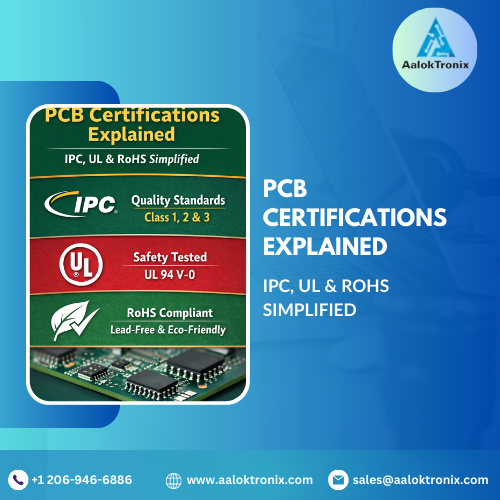
IPC (Association Connecting Electronics Industries) sets the global standards for PCB design, fabrication, and assembly.
Common IPC Classes:
- IPC Class 1 – General consumer products
- IPC Class 2 – Industrial and commercial electronics
- IPC Class 3 – High-reliability products (medical, aerospace, defense)
Why IPC Matters:
- Defines acceptable workmanship
- Improves consistency across production runs
- Reduces defects and rework
Most professional PCB manufacturers in the U.S., including Aaloktronix, design and assemble boards to IPC Class 2 or Class 3 standards, depending on application.
What Is UL Certification?
UL (Underwriters Laboratories) focuses on electrical safety and fire resistance.
UL certification evaluates:
- Flammability (commonly UL 94 V-0)
- Electrical insulation
- Material performance under stress
Why UL Matters:
- Required by many OEMs and regulatory authorities
- Essential for products sold in the U.S.
- Builds trust for consumer-facing electronics
UL certification is especially critical for power electronics, industrial systems, and products operating in high-temperature environments.
What Is RoHS Compliance?
RoHS (Restriction of Hazardous Substances) limits the use of harmful materials such as:
- Lead
- Mercury
- Cadmium
- Certain flame retardants
Why RoHS Matters:
- Required for products sold in many global markets
- Safer for users and the environment
- Expected by modern customers and partners
RoHS compliance impacts component selection, solder materials, and manufacturing processes, and must be planned early in the design stage.
How Do Certifications Affect PCB Manufacturing?
Certifications influence:
- Material selection (laminates, finishes, solder)
- Testing requirements
- Documentation and traceability
- Cost and lead time
While certified boards may cost slightly more upfront, they significantly reduce long-term risks like recalls, compliance failures, or field issues.
How to Choose the Right Certifications for Your Product
Ask these questions early:
- What industry is my product for?
- Will it be used in safety-critical environments?
- Is it sold in the U.S. only or globally?
- What do customers or regulators require?
An experienced PCB partner can help identify which certifications you actually need—and which ones you don’t—avoiding unnecessary cost.
Common Questions About PCB Certifications
Do all PCBs need UL certification?
Not all, but many U.S.-market products require UL-rated materials.
Is IPC certification mandatory?
It’s not legally mandatory, but it’s the industry benchmark for quality.
Does RoHS apply to prototypes?
Often yes—especially if the prototype will move to production.
Final Thoughts
PCB certifications are more than checkboxes—they protect your product, your customers, and your brand. Understanding IPC, UL, and RoHS helps ensure your electronics meet quality expectations while avoiding costly compliance issues down the line.
At Aaloktronix, we guide clients through certification requirements, ensuring every PCB is built to the right standards—no guesswork, no shortcuts.
???? Need help navigating PCB certifications for your project?
Contact Aaloktronix to review your requirements and build with confidence from prototype to production.